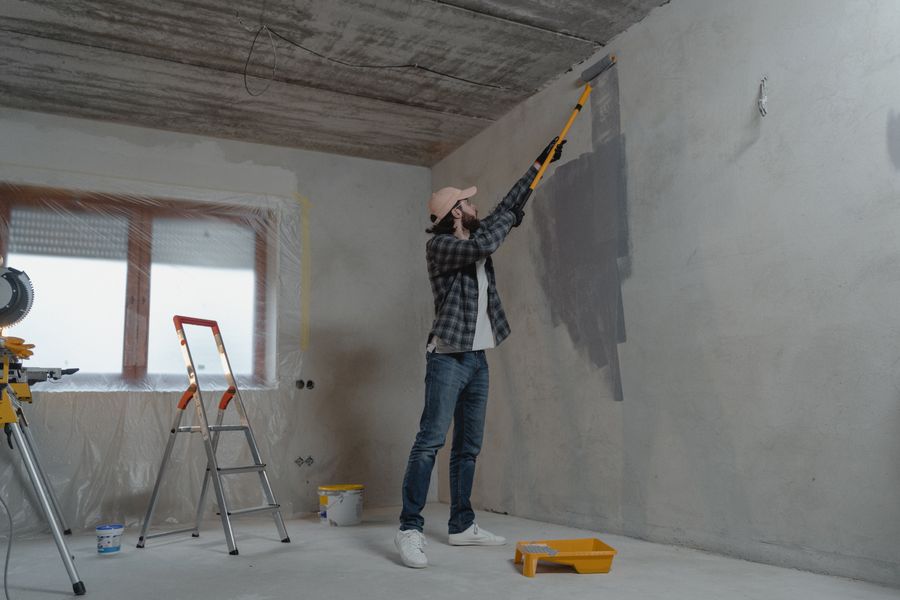
Junction tearing from soil movement
Membranes bonded rigidly across floor to wall junctions on reactive clay sites, tearing along the perimeter as the ground swells and shrinks seasonally.
Ipswich combines heritage timber homes, post war brick and rapidly expanding new estates through Ripley and Springfield. HydroForce seals wet areas across all three to AS 3740, with detailing built for the ground movement this region is known for.
Ipswich has a genuine technical issue that coastal areas largely avoid, and it is underneath the house rather than in it. Large parts of the region sit on reactive clay soils that swell significantly when wet and shrink when dry. Across a Queensland year that means real vertical movement in the ground, and everything built on it moves too. Slabs lift and settle, brickwork cracks along predictable lines, and internal wall and floor junctions open and close seasonally.
For waterproofing, that movement is the whole problem. A membrane bonded rigidly across a floor to wall junction on a reactive site is being asked to resist a force that will win. It will tear, usually along the perimeter of the wet area, and once torn it lets water into the wall base and the slab edge. The correct response is not a thicker coat of the same product. It is a bond breaker at every movement joint so the membrane can bridge and stretch, reinforcing bandage bedded into wet membrane rather than laid dry, and a system with enough elongation to accommodate real seasonal movement.
The housing stock adds a second layer. Ipswich has some of the oldest residential building fabric in Queensland, including heritage timber cottages through the town centre, Booval and Bundamba, along with extensive post war brick through Redbank, Goodna and Brassall. Many of these homes have wet areas that were built before current standards existed and have been patched repeatedly. Opening one up regularly reveals multiple generations of floor build up and a membrane that was either never installed or has long since failed.
At the other end sits the Ripley Valley and Springfield growth corridor, which is among the fastest developing residential areas in Australia. These are new slabs on engineered fill, built to a program, with waterproofing squeezed between the plumber and the tiler. The soil classification on many of these sites is exactly why the detailing matters, and it is exactly the detailing that gets skipped when a schedule tightens.

Every service below is available across Ipswich with the same specification, the same testing and the same certification.
Full wet area membrane systems for renovations and new builds, covering floors, hobs, walls and every penetration.
View serviceStep down, hobless and hobbed enclosures with reinforced corners, verified falls and a full flood test before tiling.
View serviceInternal and upper level laundries protected against hose failure and overflow, including tub bays and floor wastes.
View serviceBalconies, podium decks, planter boxes, plant rooms and multi unit amenities delivered as a documented program.
View serviceSoil movement, ageing fabric and fast growth corridor construction produce a distinctive local pattern.
Membranes bonded rigidly across floor to wall junctions on reactive clay sites, tearing along the perimeter as the ground swells and shrinks seasonally.
Older homes where the wet area was added or converted decades ago, often with no membrane at all beneath the current floor finish.
Bathrooms with a screed over a screed over the original floor, each layer added by a different renovation and none of them ever removed.
New estate construction where waterproofing sits on the critical path and gets compressed to keep a volume program on schedule.
Water entering at the wet area perimeter and tracking into the slab edge, showing up later as rising damp marks on the outside of the wall.
Previous repairs that resealed grout and silicone without addressing a torn membrane underneath, so the leak returns within a season.
If your suburb is not listed, call us. We cover Ipswich and the surrounding region, and will tell you straight away whether we can service your address.
Bond breakers at every movement joint and a membrane system chosen for elongation, because reactive soil sites need a membrane that can stretch rather than one that is simply thick.
On heritage and post war properties we investigate the existing build up before quoting rather than assuming what is under the tiles.
We resource for volume work through the Ripley Valley and Springfield corridors while holding the same specification we apply to a single renovation.
AS 3740 certificate, stage photographs and the 7 year workmanship warranty issued the day the flood test passes.
On a reactive clay site, a wet area failure is rarely a simple leak. It usually arrives with cracking, movement and a genuine question about whether the cause is the waterproofing, the slab design, the drainage around the building or all three. When that question becomes a claim, the party with documentation is in a much stronger position than the party relying on recollection.
Every Ipswich job we complete is issued with an AS 3740 compliance certificate, dated photographs of the preparation, the junction detailing, both membrane coats and the flood test, and a signed 7 year workmanship warranty. If a dispute later turns on whether the membrane was detailed correctly for a moving substrate, that photographic evidence of bond breakers and bandage in place answers the question directly. It is also exactly what an insurer or a building consultant will ask for first.

Our Brassall bathroom had been repaired twice by others and kept leaking. HydroForce found the membrane had torn at the floor junction from ground movement, rebuilt it with a bond breaker and it has been dry ever since.

Trevor Hanley
Directly. Reactive clay soils swell when wet and shrink when dry, and that vertical movement transfers into the slab and the walls above it. A membrane bonded rigidly across the floor to wall junction has to either stretch with that movement or tear. Bond breakers at movement joints let the membrane bridge the joint instead of being pulled apart by it, which is why we treat that detail as mandatory rather than optional on Ipswich jobs.
Yes, and it is common work for us in the older parts of Ipswich. Timber framed cottages move more than brick, the floors are often not level, and there may be no existing membrane at all. We assess the framing and the sheeting first, because a membrane fixed to a substrate that flexes will not perform no matter how good the product is.
Yes. Those corridors are a significant part of our Ipswich workload and we resource for volume programs there. What we ask of builders is a realistic window between the plumber and the tiler so the method is not compressed, because the detailing on these sites is exactly what the soil classification demands.
In our experience that pattern almost always means the previous repairs addressed the symptom rather than the cause. Regrouting and resiliconing fixes a surface problem. If the membrane underneath has torn at a junction, water keeps passing regardless of how good the grout looks. We moisture test and investigate before quoting so we can tell you whether you are looking at a surface repair or a rebuild.
It follows the same variables as anywhere: wet area size, substrate, level in the building and number of penetrations. Older Ipswich homes more often need substrate correction, which is the main reason a renovation here can price higher than an equivalent new build. We inspect and give you a fixed written price within 24 hours.
Yes. Every completed wet area receives an AS 3740 compliance certificate with a photographic record and warranty documentation, issued the day the flood test passes so it never becomes the item holding up a handover.
Send your project details through and a HydroForce supervisor will call you back the same business day to arrange an inspection anywhere in Ipswich.